
Asteroid 1822, Waterman, was discovered July 25, 1950 by the Indiana Asteroid Program at the Goethe Link Observatory at Brooklyn, Indiana. The Indiana Asteroid Program, which went on from 1947 to 1967 under the auspices of Indiana University, involved a lot of people; it was directed by Frank K. Edmondson, the photographic plates were taken by Beryl Potter, then, after her retirement, by Delores Owings; and the photometry was directed by Tom Gehrels. Asteroid Waterman has a period of 3 years, 72 days.
It was named for American physicist Alan T. Waterman (1892-1967), first director of the National Science Foundation.
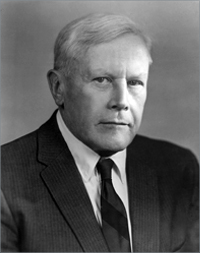
Alan Waterman
The meaning of asteroid Waterman seems to be: to nurture, to "carry water" (figuratively or literally).